Card games have been a source of entertainment for centuries, offering excitement, competition, and bonding among friends and families. One game that has gained attention for its simple 29 card game offline download yet engaging gameplay is the sweep card game. To play successfully and enjoy the game to its fullest, it is important to understand the sweep card game rules. These rules not only guide the way the game unfolds but also ensure fairness, fun, and strategy. This guide will break down 10 simple sweep card game rules every player should learn, making it easier for beginners and experienced players alike.
Understanding the Sweep Card Game
Before diving into the sweep card game rules, it helps to know the basics. Sweep is a capturing game played with a standard 52-card deck. The objective is to capture cards from the table by matching or combining them with cards in your hand. A player scores additional points when they successfully clear all the cards from the table in one move, which is known as a sweep. The game blends skill and strategy with a touch of luck, making it enjoyable for casual and competitive settings.
Rule 1: Setup of the Sweep Card Game
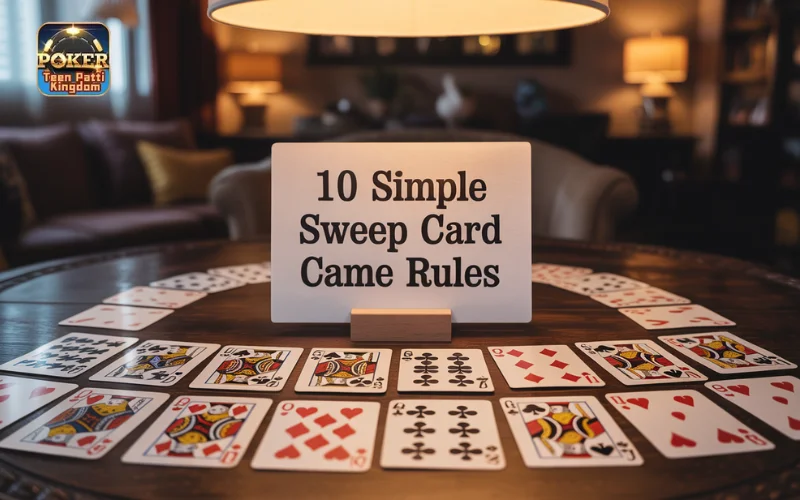
The sweep card game rules begin with the proper setup. A standard 52-card deck is shuffled thoroughly. Depending on the number of players, each person is dealt a specific number of cards, usually four cards each. Additionally, four cards are placed face up on the table. The remaining deck is kept aside for future rounds. The initial layout is crucial because it sets the stage for the gameplay and influences the strategies players can use.
Rule 2: Objective of the Game
One of the most important sweep card game rules is knowing the objective. The main goal is to capture as many cards as possible and maximize points. Players achieve this by matching cards in their hand with cards on the table or creating combinations that add up to the same value. For example, if a player has a 9 in hand and the table has a 4 and 5, they can capture both. Clearing the table entirely counts as a sweep and gives bonus points.
Rule 3: Capturing Cards
Capturing is at the heart of the sweep card game rules. A card can capture another card if both share the same rank. For instance, a 7 from the hand can capture a 7 from the table. Players can also capture sets of cards whose total value matches the value of the card played. This rule adds an element of strategy because players must choose wisely whether to capture single cards or combinations, keeping future moves in mind.
Rule 4: Sweeps and Bonus Points
One of the exciting sweep card game rules involves sweeps. A sweep occurs when a player clears all the cards on the table in a single move. This special action not only gives satisfaction but also grants bonus points. Sweeps can change the course of the game, so players should always look for opportunities to execute them. The more sweeps a player achieves, the higher their chances of winning the game.
Rule 5: Playing Order
The sweep card game rules specify that the dealer distributes the cards and then players take turns in clockwise order. Each turn involves playing one card from the hand, attempting to capture cards from the table, or discarding a card if no capture is possible. The playing order ensures fairness and helps maintain a steady flow of the game. Players must be attentive to their turn and anticipate the moves of others.
Rule 6: Building Combinations
Another interesting rule in sweep card game rules is building. A player may combine a table card with a hand card to build a higher value for future captures. For example, a player may place a 3 on top of a 5, announcing it as a build of 8. The next player must either capture that build with an 8 or continue to add to the build. This rule adds depth and strategy, forcing players to think ahead and plan their moves carefully.
Rule 7: Discarding Cards
Not every turn leads to a capture. According to sweep card game rules, if a player cannot capture or build, they must discard one card face up onto the table. This discarded card becomes available for capture by other players in later turns. Strategic discarding is important because the wrong card might give an opponent an advantage. Players must think twice before discarding to avoid helping their rivals.
Rule 8: Dealing New Cards
When all players run out of cards in their hands, the dealer distributes four new cards to each player from the remaining deck. The sweep card game rules dictate that this process continues until the deck is empty. Dealing new cards keeps the game fresh and allows players to adjust strategies throughout the session. This cycle of playing, capturing, discarding, and dealing creates dynamic gameplay.
Rule 9: End of the Round
The sweep card game rules explain that the round ends when the deck has been fully dealt and players have played all their cards. At the end of the round, the last player to make a capture collects any remaining cards on the table. This ensures that no cards are left unclaimed. Counting points then follows, where sweeps and captured cards are tallied to determine the winner of the round.
Rule 10: Scoring System
The final rule among the sweep card game rules is scoring. Players score points based on the number of cards captured, with special values given to certain cards like aces or face cards depending on the variation played. Each sweep also provides bonus points. The player with the highest total points after tallying is declared the winner. Some versions of the game play multiple rounds, and the overall winner is the one with the most points accumulated.
Strategies for Playing the Sweep Card Game
While knowing the sweep card game rules is essential, applying strategies makes the game more engaging. Players should keep track of cards that have been played to predict their opponents’ possible moves. Timing is crucial for executing sweeps, and holding onto certain cards for the right moment can turn the tide of the game. Balancing between capturing, building, and discarding ensures better control of the table.
Why Learning Sweep Card Game Rules Matters
Learning sweep card game rules is not just about following structure but also about enhancing enjoyment. Clear rules prevent disputes, promote fair play, and allow players to focus on strategy. Whether you are playing casually with friends or in a competitive setting, understanding the rules ensures everyone has a great experience.
Conclusion
The sweep card game is easy to learn yet rich in strategy, making it enjoyable for players of all ages. By mastering the sweep card game rules, players can confidently engage in the game, aiming for sweeps, planning builds, and scoring big. These 10 simple rules form the foundation of gameplay and provide the structure needed for fair competition. Whether you are new to the game or already familiar with it, remembering these rules will help you enjoy the sweep card game to its fullest.